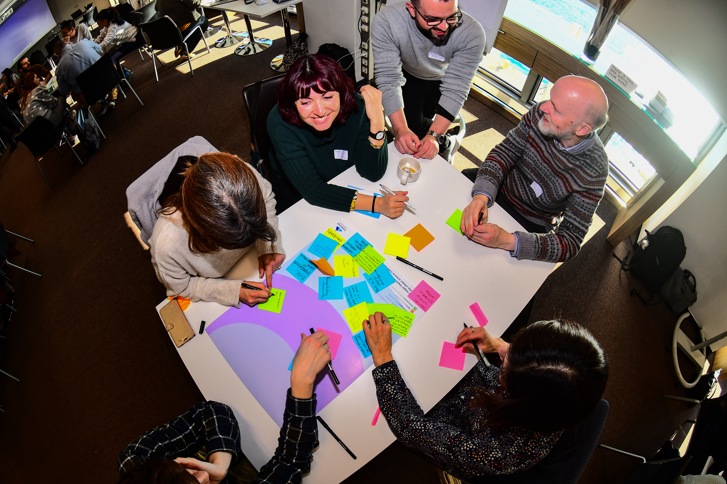
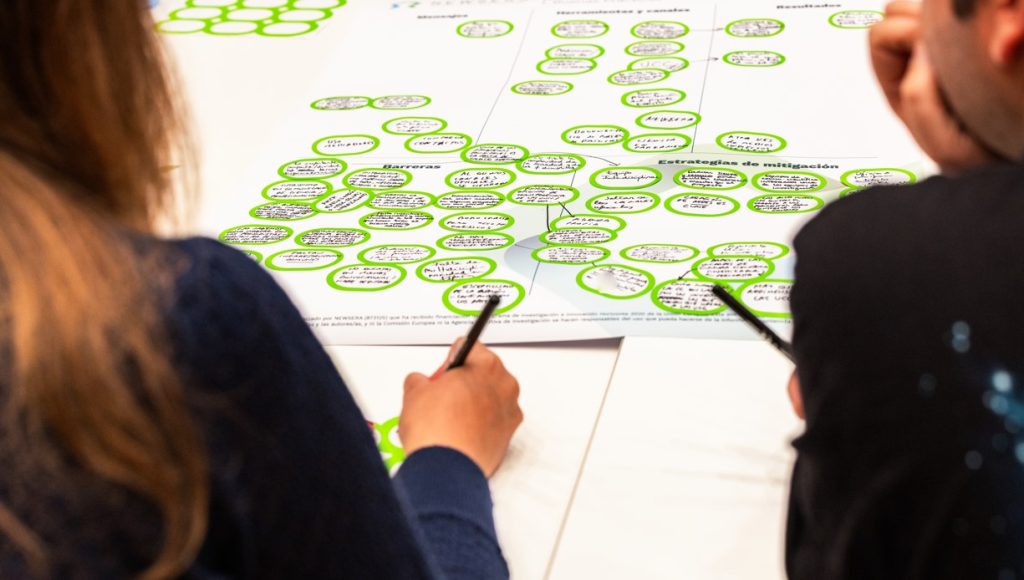
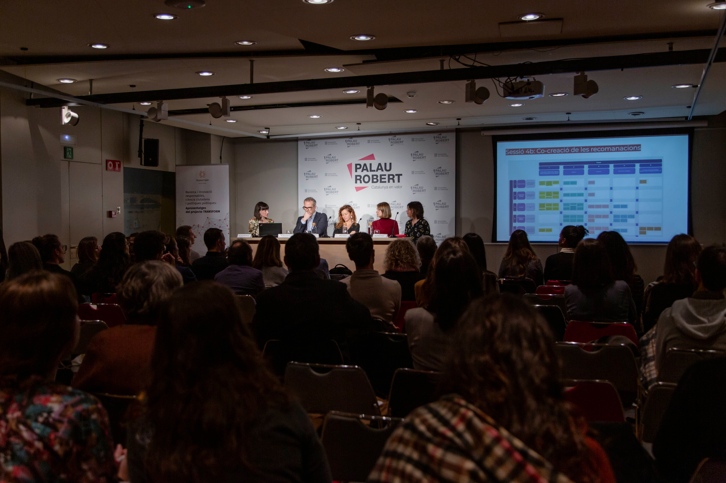
Working and creating alone no longer makes sense. At Science For Change, we co-design and co-create solutions tailored to your needs. We engage relevant stakeholders and develop methodologies for everything you need to achieve collaboratively
The power of co-design strategies lies in the people who participate. Co-design can be defined as the joint creation of value, through a creative, human-centred approach.
At Science For Change, we offer co-design and co-creation strategies tailored to your needs. These activities enable a wide range of voices to contribute to defining and addressing challenges, creating environments of equitable collaboration among participants. Are you ready to get involved?
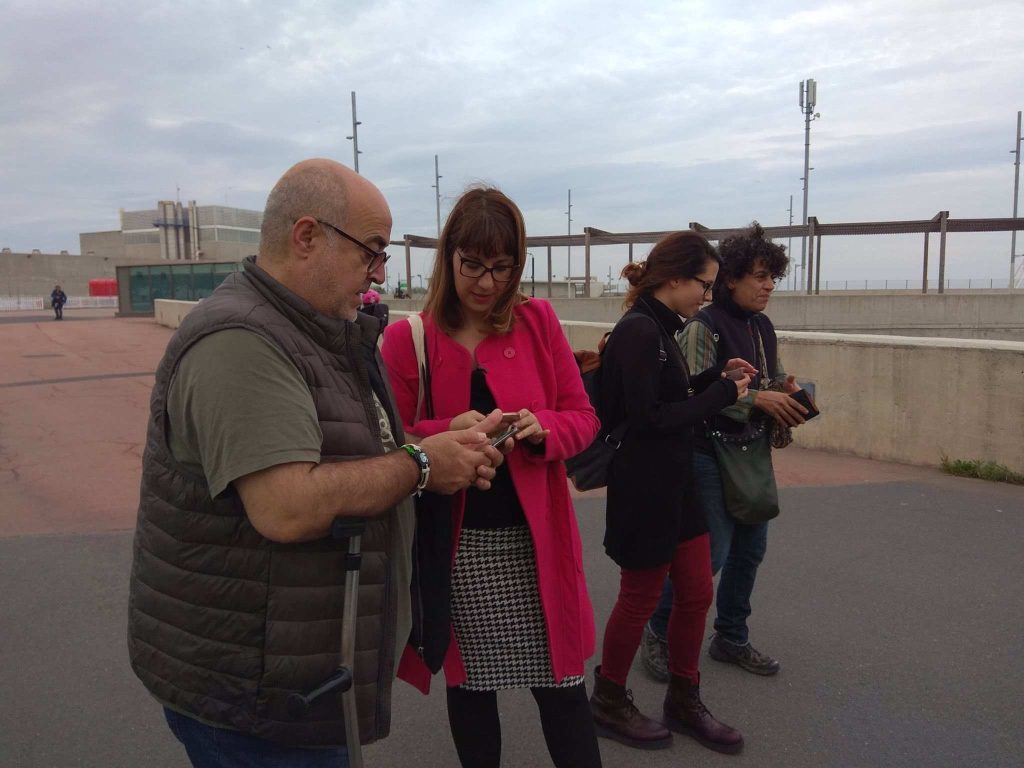
Who better than citizens to drive change? This is the power of citizen science: it enables dialogue between diverse voices, aligning science with the needs of society, while actively involving citizens in generating open scientific knowledge to solve shared challenges.
Doing citizen science is doing science. The same scientific method is followed, data is analysed in the same way… scientific rigour is not compromised. The only difference is that the project is co-designed with citizens, authorities, local councils, the private sector… With all stakeholders involved!
Citizen science is a win-win: on the one hand, it allows scientists to collect data more quickly and efficiently in places that would otherwise be inaccessible or too vast to cover, enabling a broader and deeper understanding of our world. On the other hand, it provides communities with an opportunity to contribute to scientific research by bringing creative ideas and solutions.
If you want to bring citizen science initiatives to life, you’ve come to the right place!
In a world where science drives progress, science communication plays a key role. At Science For Change, we help you improve your science communication strategies to ensure they are high-quality, innovative and effective in engaging with your target audience.
Communication between people is the fundamental foundation of society. At Science For Change, we are experts in high-quality science communication, and we apply our expertise collaboratively to bring scientific knowledge closer to society.
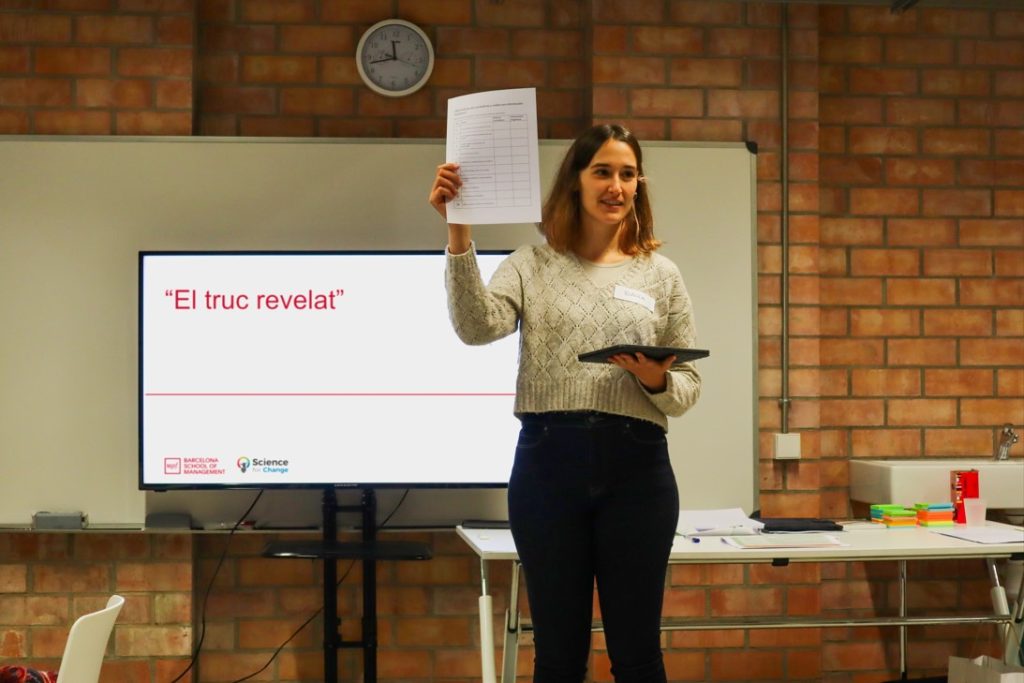
We develop collaborative and co-creation methodologies to establish science communication strategies and impact indicators to reach different target audiences. We also offer workshops that promote critical thinking and bring science closer to society.
We live in a complex society. That is why policymakers, society and the scientific community need to work together to achieve progress. At Science For Change, we apply a multi-level governance model to make meaningful contributions to public policies based on scientific evidence.
At Science For Change, we are committed to social innovation. Our mission is to facilitate collaboration between science, policy and society so that science effectively responds to people’s needs. The result? Evidence-informed public policies that meet society’s needs and are widely accepted.
When it comes to achieving social goals, scientific evidence is our most powerful ally. A solid scientific foundation increases the chances of solving collective challenges. Aligning science and policy has become a necessity. We know it is not easy, but will you give us a chance?
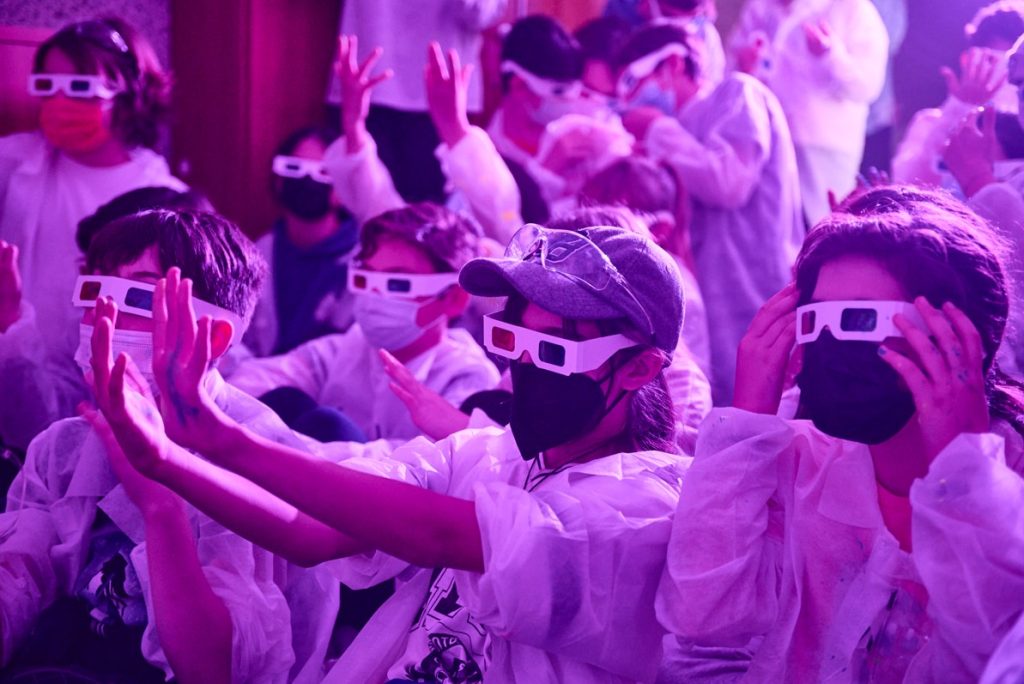
Art and science, a winning combination. Art is a language that stimulates emotions, engages audiences and sparks reactions. It is a powerful tool for bringing science closer to citizens, allowing them to experience it in a different way.
At Science For Change, we believe that art is both an ally and a tool for science. It not only helps communicate results but also enables creative data collection, makes complex concepts essential to citizen science research more accessible, and builds lasting connections between science and citizens through fascination, curiosity and an open invitation to create.
Our services invite you to explore this fascinating world where beauty and logic intertwine. From the collaborative creation of exhibition displays to workshops that bring art and science together, or evaluating citizen participation in museums… Are you ready to bring these two worlds together?
Health does not depend solely on medical care. Living conditions, personal relationships and the environment also influence our well-being.
At Science For Change, we work with patients, professionals, and healthcare and social care organisations to improve research and care services from a biopsychosocial and gender perspective.
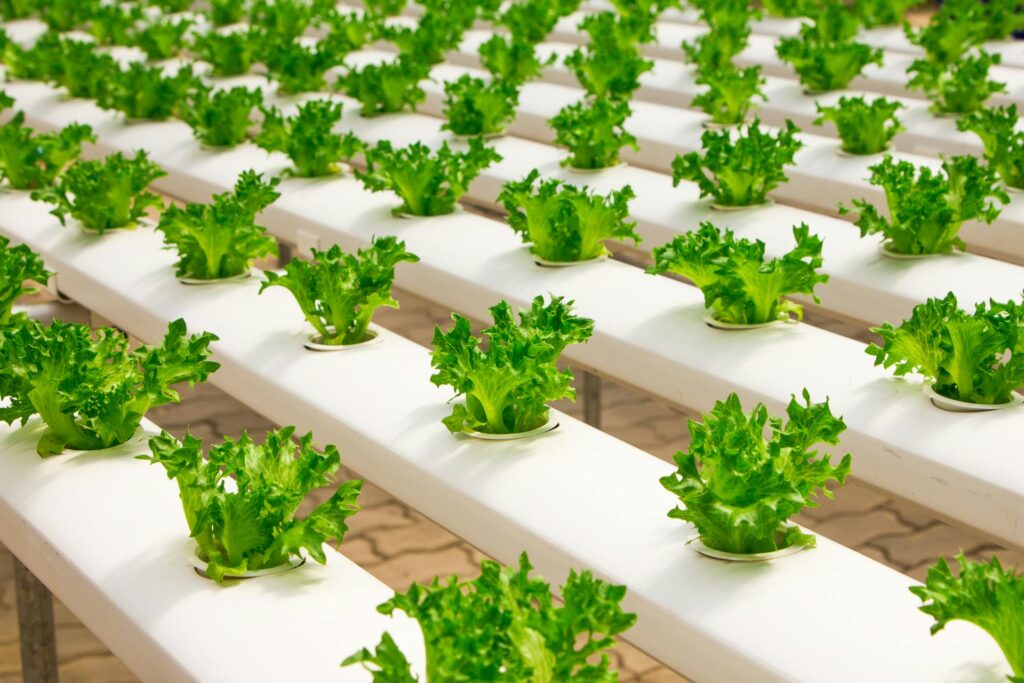
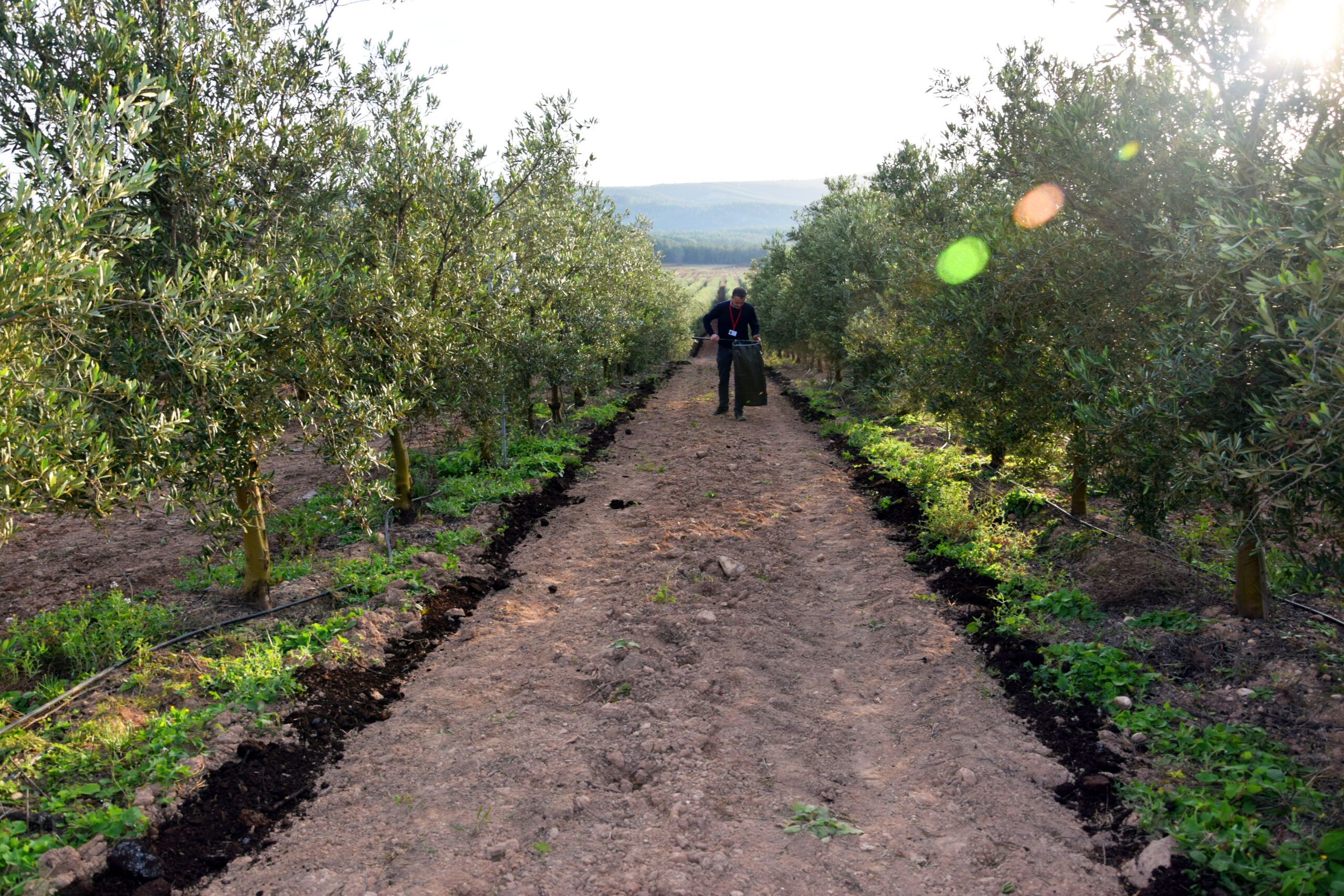
Protecting our environment and moving towards a more sustainable future requires understanding the problems, listening to people and working together to find solutions.
At Science For Change, we combine science, technology and citizen participation to better understand environmental challenges and provide valuable knowledge to support decision-making. We take a broad approach to sustainability, considering the environment, people and the unique characteristics of each territory.