29 de July de 2026
How Citizen Science Helps Manage Odour Issues
During the summer, high temperatures accelerate the decomposition of organic matter and increase the volatility of certain compounds. Combined with atmospheric conditions that hinder their dispersion, this can intensify odour episodes and affect the well-being and quality of life of communities located near potentially emitting activities.
For companies and managing organisations, these situations can result in increased complaints, conflict and loss of trust. To address this challenge, OdourCollect combines citizen science, data analysis and collaboration between citizens, companies and public authorities to turn odour perceptions into useful information and support more effective preventive measures.
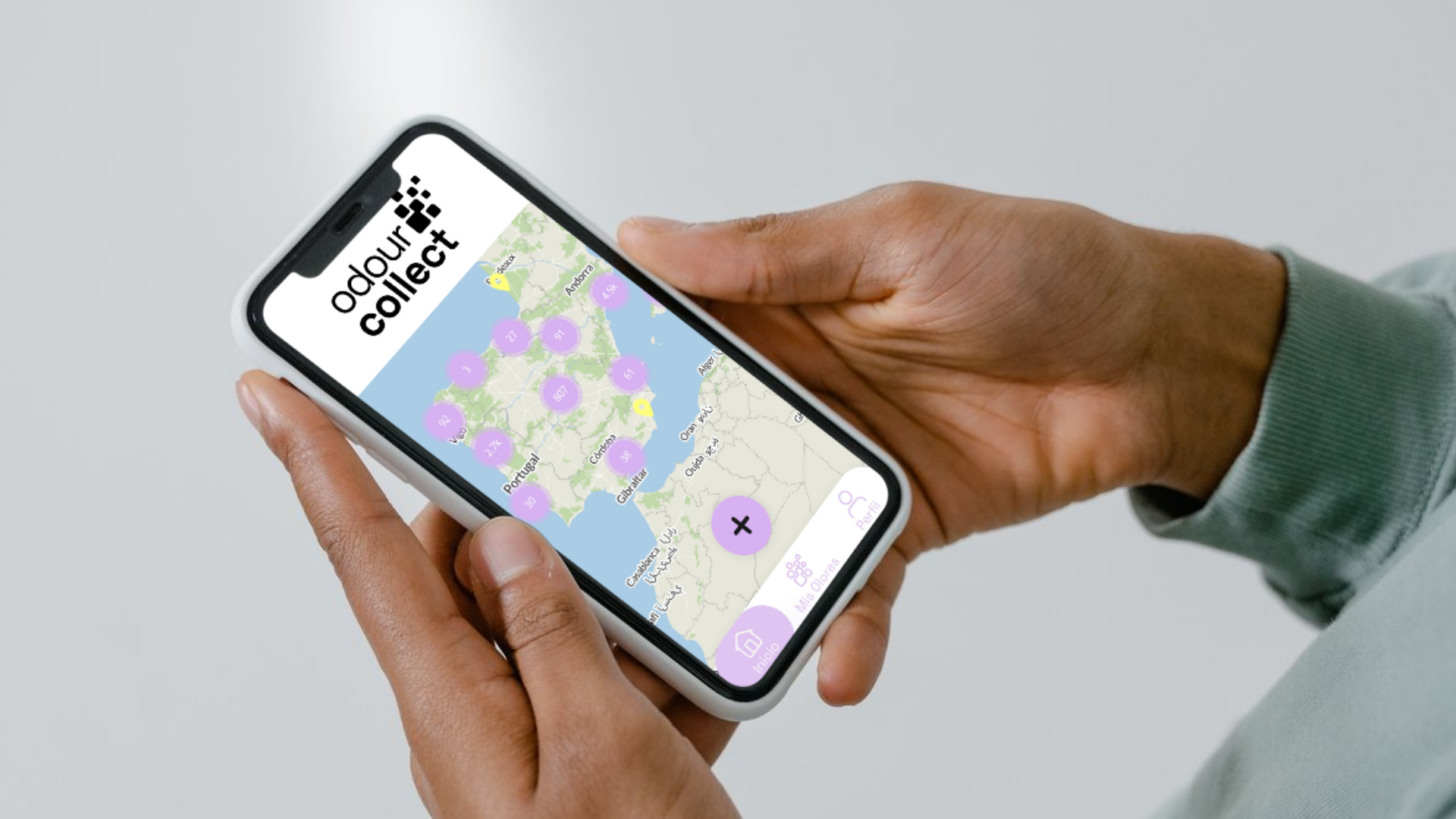
OdourCollect is a citizen science application that enables people to record where, when and how intensely they perceive an odour on a map. When combined with meteorological and environmental information, these data complement technical measurements and help identify patterns, guide inspections and assess corrective measures. Developed by Science for Change as part of the European D-NOSES project, OdourCollect has been used in a range of contexts, including the experiences of IKANI Innovación Ambiental and Vilanova i la Geltrú City Council.
The IKANI Case in Ecuador
IKANI Innovación Ambiental approaches odour pollution as an issue with two dimensions: the technical characterisation of emission sources and the nuisance experienced by people in their everyday environment. Its work in Ecuador shows that both perspectives need to be analysed together.
In the project carried out around La Tejedora Shopping Centre in Quito, OdourCollect helped transform scattered perceptions and complaints into systematic, comparable and geolocated records, following standards such as UNE 77270. This information made it easier to identify patterns and determine when and where the nuisance occurred.
In more complex studies, such as those conducted at fish-processing plants, citizen reports were combined with field olfactometry and international protocols to identify the possible source of odours more rigorously and generate useful information for decision-making.
“When communities, technical expertise and a rigorous methodology work together, odour is no longer a complaint that is difficult to substantiate and becomes useful information for managing the local environment.” — IKANI Innovación Ambiental
This case shows that citizen participation becomes more valuable when it is integrated into a clear methodology and combined with technical expertise. In addition to enriching the assessment process, this approach encourages communities to become involved in monitoring and caring for their surroundings.
Vilanova i la Geltrú: Citizen Participation to Improve Management
Vilanova i la Geltrú City Council considers citizen participation an essential tool for better understanding and managing odour nuisance in urban environments. In the area surrounding the Pastera stream, the Companyia d’Aigües, the publicly owned company responsible for drinking-water supply and sanitation services, combined environmental sensors with citizen observations collected through OdourCollect.
Residents’ observations made it possible to determine when, where and how intensely odours were perceived. This information complemented the existing monitoring network and helped guide inspections and assess the measures implemented.
The initiative provided a perspective that was more closely aligned with the everyday experiences of the people affected. While the sensors supplied information about environmental conditions, citizen reports showed how those conditions were experienced in different parts of the area.
“Citizen science allows us to complement technical data with residents’ everyday experiences, prioritise action and strengthen a more transparent and participatory approach to management.” — Vilanova i la Geltrú City Council
Beyond collecting data, the project helped establish a communication channel between the local authority, the managing company and the public. This ongoing relationship supported a management approach that was clearer, more accessible and more collaborative.
Towards More Preventive and Transparent Management
Do you need to prevent, analyse or reduce an odour problem? Our team can help you identify the issue and define an effective strategy tailored to your context.
Contact us at hello@scienceforchange.eu.
Compartir en