

Co-creation
Today's major challenges cannot be solved from a single perspective. We need to bring together different types of knowledge, experiences and perspectives to develop solutions that respond to people's real needs.
That's why, at Science For Change, we believe collaboration is a key driver of innovation. Co-creation is part of our DNA and is embedded in all our projects.
But… what is co-creation?
Co-creation or co-design means involving the people and organisations connected to a challenge from the very beginning of the process, to better understand their needs, bring together different types of knowledge and develop solutions collaboratively.
Think, for example, about improving air quality in a city. Addressing a challenge like this means bringing public authorities, the scientific community, businesses and citizens together around the same table. Not just to hear their perspectives, but to work together, identify which actions could be effective and test solutions tailored to the needs of the local community.
Ultimately, co-design means creating solutions with people, not just for people.
The Quadruple Helix Model
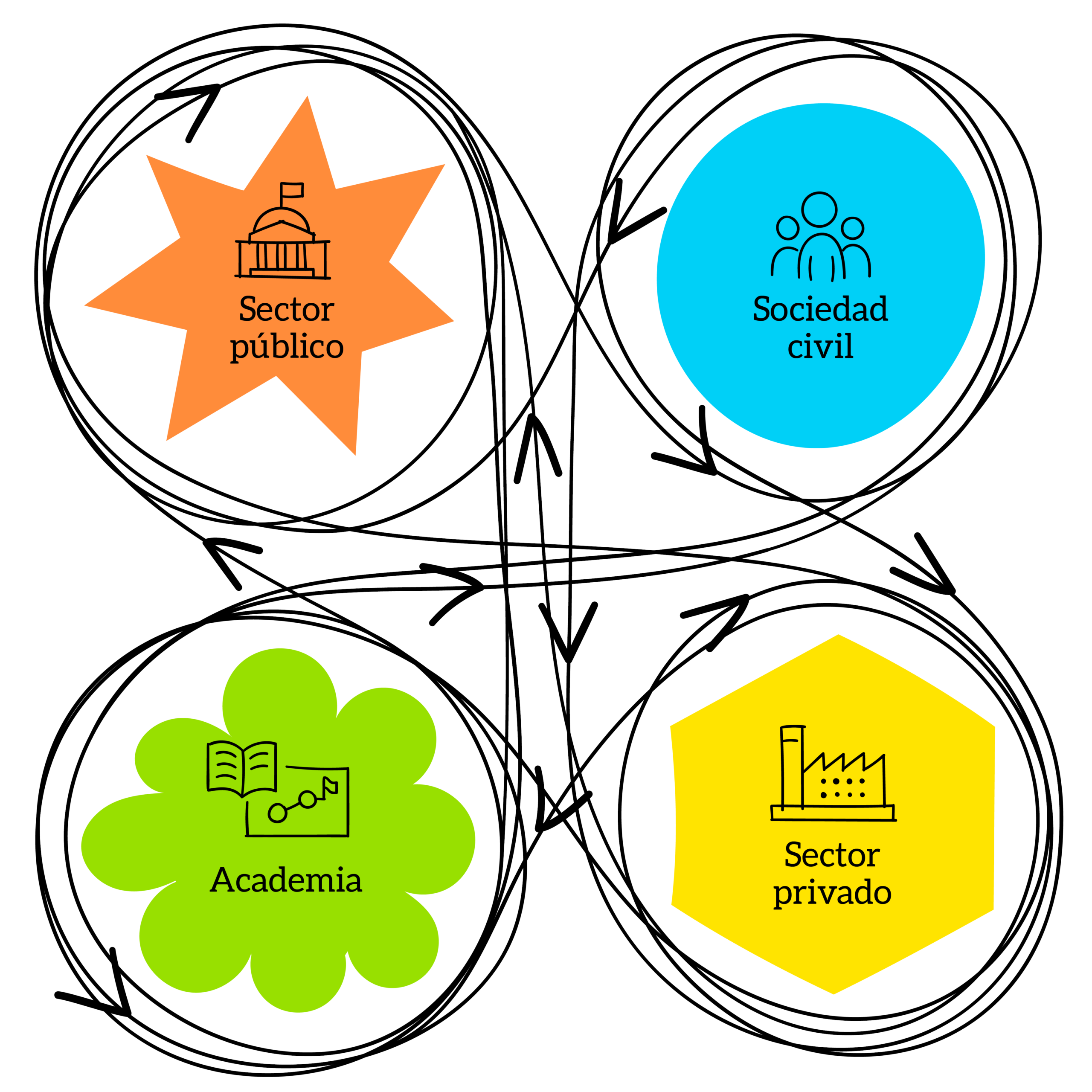
Complex challenges require collaboration between different stakeholders. That's why, at Science For Change, we regularly work with the Quadruple Helix Model.
Our approach brings together different perspectives and expertise from the very beginning to develop inclusive, comprehensive solutions tailored to each context:
- Public sector: public administrations and government bodies.
- Civil society: citizens, associations and civil society organisations.
- Private sector: businesses and economic stakeholders.
- Academia: the scientific community and experts.
We have extensive experience supporting organisations across different sectors through our co-design sessions, including research and education, public administration, industry, healthcare, cultural and creative industries, and the media.
How do we approach co-creation at Science For Change?
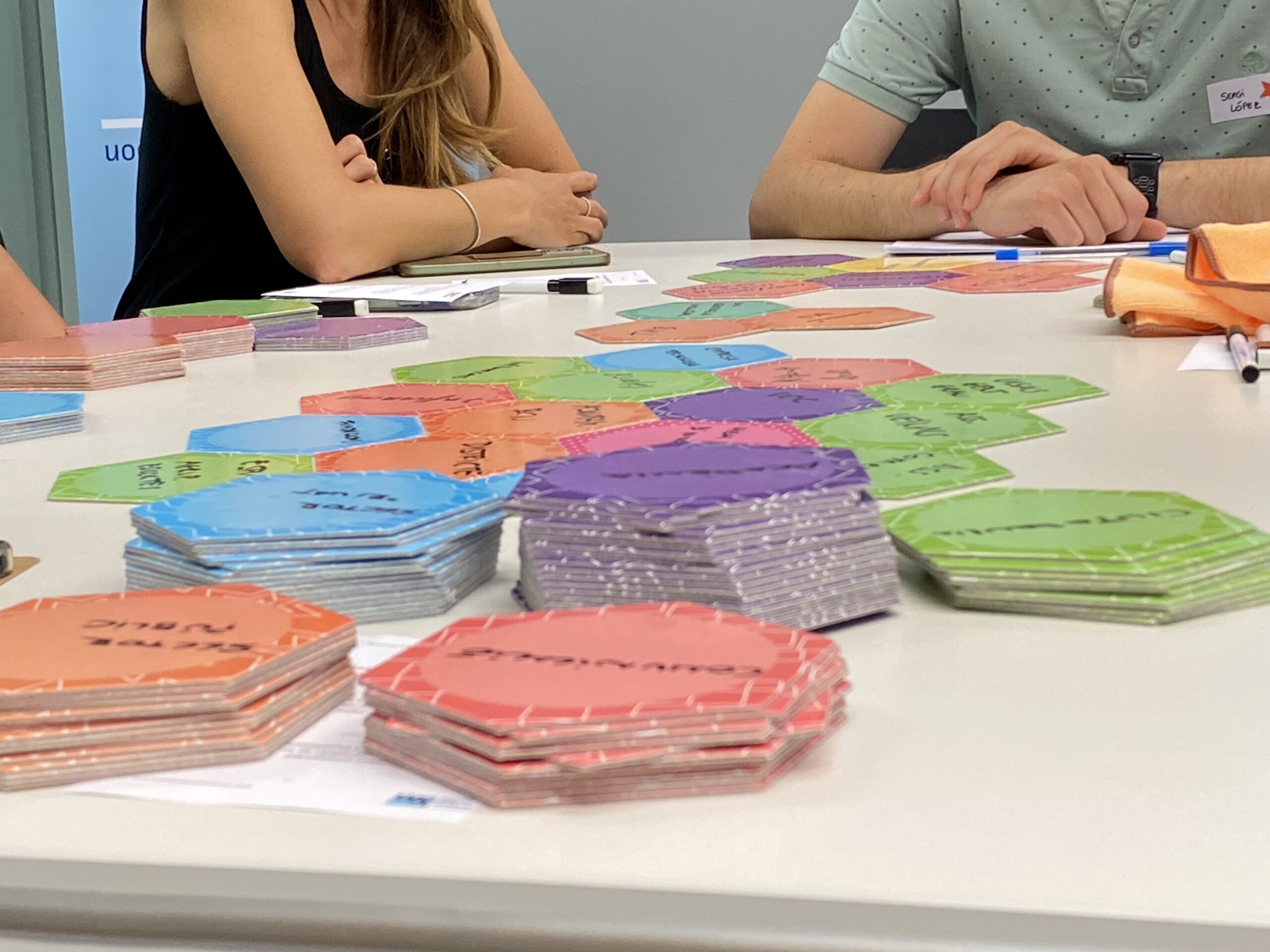
At Science For Change, we have developed our own inclusive and adaptable methodology to support organisations and communities in collaboratively developing solutions and making shared decisions. We start by understanding the challenge and identifying key stakeholders to design tailored participatory processes.

To implement and facilitate these processes, we have developed SFC Tools, our set of tools designed to apply co-design methodologies in a practical, flexible and sustainable way.
These tools allow us to adapt co-design methods to each challenge and every stage of the process, facilitating knowledge exchange, idea generation and the transformation of participants' contributions into actionable outcomes.
Thanks to its replicable and flexible nature, our methodology can be adapted to projects across different topics and contexts, allowing us to tailor each process to its specific needs. We have implemented co-design processes in areas such as sustainability and the environment, air quality, circular economy, urban ecology, climate emergency, energy and mobility, agriculture and food, biodiversity, health, social sciences, arts and humanities.
Our co-design services have played a key role in numerous European projects, including:


We also carry out private projects with companies, hospitals, public administrations, universities and other organisations, tailoring each process to their specific challenges, objectives and needs.
We also carry out private projects with companies, hospitals, public administrations, universities and other organisations, tailoring each process to their specific challenges, objectives and needs.
Together, these projects demonstrate the potential of co-design to bring together different perspectives and develop solutions to a wide range of challenges.
Projects driving innovation through co-design
Projects driving innovation
through co-design